
Spain
Spain’s volcanic wine regions range from purely volcanic environments in the Canary Islands to volcanically influenced mainland zones. This geological diversity, shaped by basalt, volcanic ash, lava rock, and volcanic sands, plays a defining role in the freshness, salinity, and site-specific expression of Spain’s volcanic wines.
REGIONS:
Canary Islands
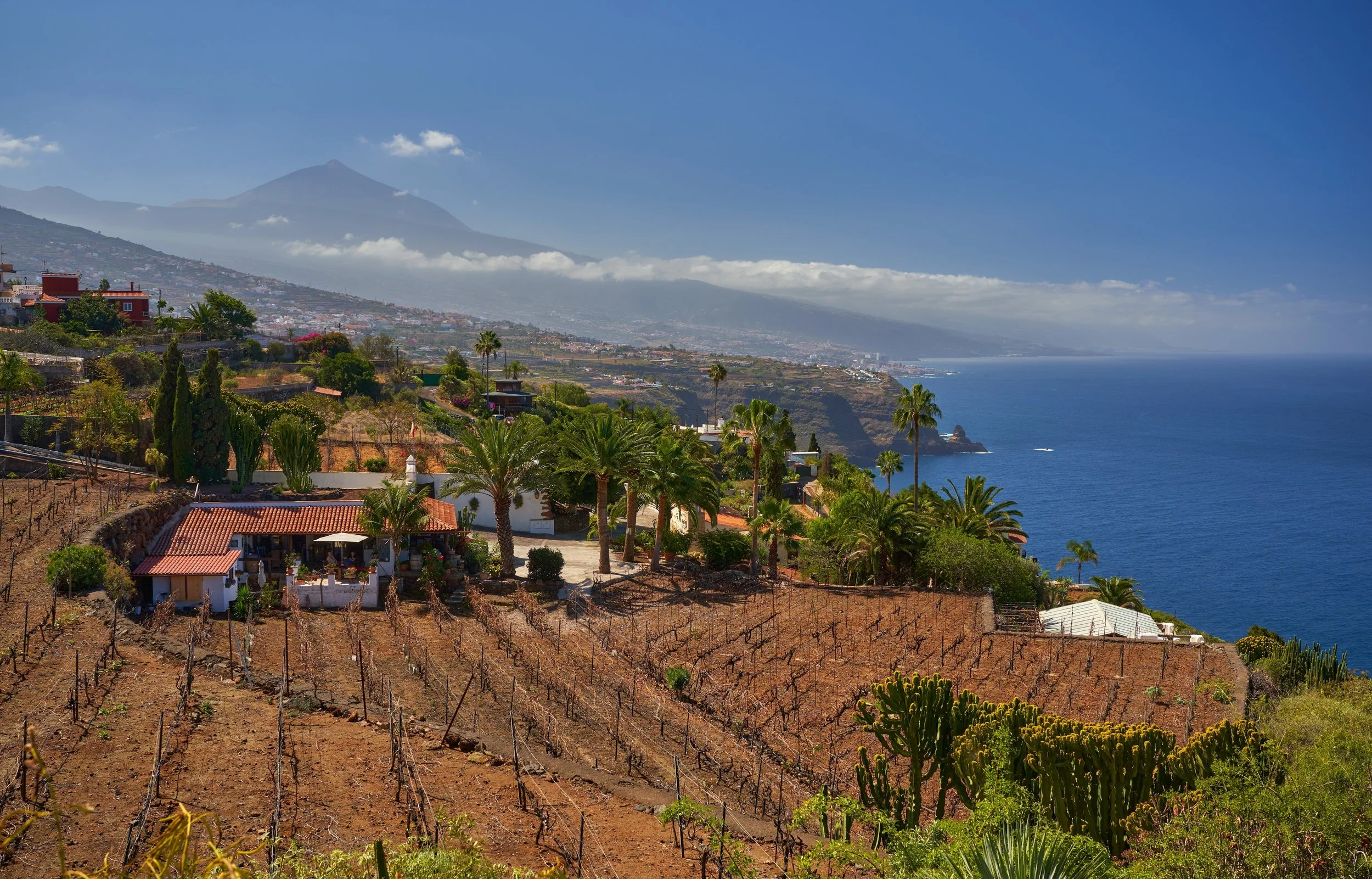
Spain’s most overtly volcanic wine region, the Canary Islands are formed entirely from volcanic activity and remain geologically active. Vineyards are planted in pure volcanic ash, basalt, and lava rock, often at extreme elevations and in windswept conditions. Indigenous varieties such as Listán Negro, Listán Blanco, Malvasía Volcánica, and Negramoll produce wines with pronounced salinity, minerality, and freshness.
Key sub-regions include:
Lanzarote – Vines planted in volcanic ash pits (hoyos) over lava bedrock
Tenerife – High-elevation volcanic slopes with remarkable soil diversity
La Palma & El Hierro – Steep, rugged sites with intense Atlantic influence
Priorat (Catalonia)
Priorat is defined by its iconic llicorella soils—weathered slate with volcanic origins—contributing to the region’s powerful yet structured wines. These fractured soils promote deep root systems and low yields, producing concentrated Garnacha and Cariñena with marked minerality, tension, and aging potential.
Campo de Calatrava
One of mainland Spain’s most significant volcanic zones, Campo de Calatrava sits atop an ancient volcanic field with over 300 extinct volcanoes. Basalt and volcanic ash soils dominate, contributing to fresh, expressive wines from varieties such as Tempranillo and Garnacha, often with lifted acidity despite the region’s warm climate.
Empordà (Catalonia)
Located in northeastern Spain near the Pyrenees, Empordà features volcanic and metamorphic soils mixed with slate and granite. The region’s Tramontana winds and volcanic components contribute to structured yet aromatic wines, particularly from Garnacha and Cariñena.
La Palma & Mainland Andalusian Volcanic Sites
Smaller volcanic influences appear in parts of southern Spain, where ancient volcanic activity contributes basaltic elements to otherwise mixed soils. These pockets offer unique expressions shaped by heat, elevation, and mineral-rich subsoils.